Real Car Driving Open Sandbox
- 4.6
- Rating
- 10.00M
- Installs
- Free
- Price
 Analysis by App-foxy
I approached Real Car Driving Open Sandbox as a game for people who want to get behind the wheel without committing to a tightly structured racing campaign. It sits in the racing category, but its appeal is broader than simply chasing a finish line. The central question is whether you want an open driving space where you can spend time handling a car, or a more traditional racer built around clearly defined events, opponents, and progression.
After using it, my impression is that this is best understood as a casual driving playground with competitive energy rather than a serious simulation. It is free to start, available from Zendios, and carries a Teen content rating. That combination makes it easy to try, but the real decision depends on how much freedom you value compared with polished structure, deep tuning, or a campaign that constantly tells you what to do next.
What to consider before choosing this driving game
The first thing I would decide is how I usually play racing games. If I have only a few minutes, I want to launch quickly, drive around, and enjoy the feeling of movement without learning a complicated system. If I have a longer session, I may want meaningful progression, carefully designed tracks, a large vehicle roster, or competition that tests precise driving. Real Car Driving Open Sandbox leans toward the first kind of player, while still offering enough racing flavor to keep the experience from feeling like a simple free-roaming toy.
You May Also Like

 Blood Strike: 2.5 Anniversary
Blood Strike’s Loadouts Turn Every Drop Into a Tactical Gamble
A close look at Blood Strike’s custom loadouts: how fast access to signature weapons reshapes its battle royale rhythm, rewards preparation, and narrows the gap between fights.

 Pandora - Music & Podcasts
Pandora’s Music Is Easy to Start, but Harder to Recover
Pandora’s strength is its low-effort path from a seed to a station. Its weak spot is how much confidence it asks you to place in connection, setup, and quiet recovery.

 8 Ball Pool
 Is Built on Rivalries, Rematches, and Routine
A close look at the rivalries, rematches, shared routines, and unanswered safety questions that turn a quick pool match into a persistent mobile community.

 Samsung Music
’s Quiet Strength Is Playing What You Already Own
Its reach comes less from spectacle than from dependable access to a personal library. That simplicity is both the app’s strongest retention engine and its ceiling.

 AccuWeather: Weather Radar
AccuWeather Review: A Quick, Clear Forecast for Everyday Decisions
For everyday plans, the best forecast is the one you can understand quickly. AccuWeather makes rain timing, radar, and local conditions easy to act on, with a few trade-offs.

 Hill Climb Racing
Why Hill Climb Racing Still Turns Crashes Into One More Run
A tiny car, a bumpy hill and one more upgrade: Hill Climb Racing keeps resurfacing because its simple chaos makes every near-miss feel personal.
More From Our News Desk
View All News


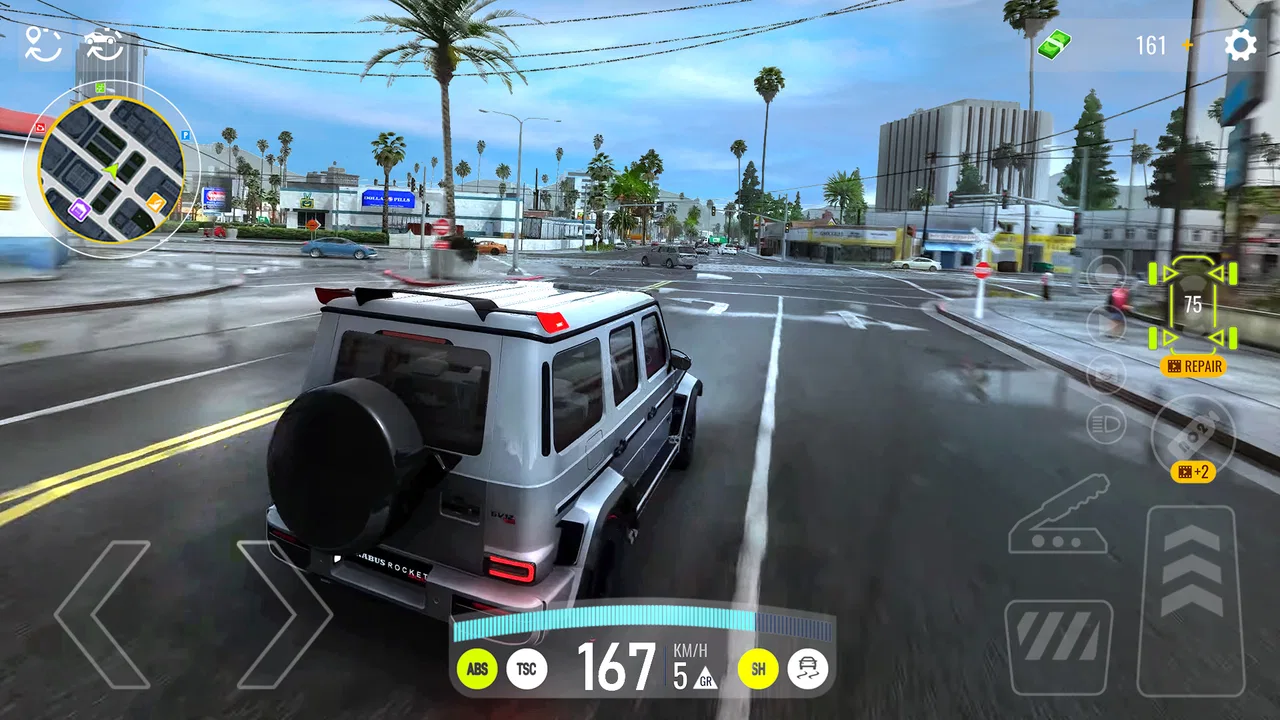
The title’s open-sandbox identity matters. Instead of treating every moment as a formal race, it encourages me to think about the car itself: how it responds when I turn, how much space I need to slow down, and how confidently I can move through the environment. That makes it approachable for someone who is not already comfortable with racing games. I can experiment without feeling that every mistake ruins a carefully planned championship.
At the same time, open driving can expose a game’s limits more quickly than a tightly scripted race. In a conventional racer, a new circuit, rival, or event can provide an obvious goal. Here, some of the motivation comes from me. I need to create my own reasons to keep driving, whether that means practicing lines, exploring, or trying to improve a run. Players who need constant rewards may find that freedom less exciting than expected.
The game is free, which lowers the barrier to entry, but optional purchases range from $0.99 to $19.99 per item. I would treat that as a reason to decide my spending boundary before playing rather than as an automatic problem. The useful test is simple: can I enjoy the basic driving loop without feeling pushed toward a purchase? For a casual player, the answer will determine whether the free entry remains genuinely comfortable over time.
It is also worth checking device compatibility before getting invested. The game supports Android 8.1 and later, so it is not limited to only the newest phones. Still, racing games can feel very different depending on screen size, touch response, and how well a device maintains smooth performance. I prefer testing steering and camera control early, because an uncomfortable control layout can matter more than attractive visuals.
How the controls shape the first few sessions
My advice is to spend the opening session learning the controls instead of immediately judging the game by how fast the car can go. In a driving game, acceleration is easy to notice, but braking and turning determine whether the experience stays enjoyable. I try gentle turns first, then tighter changes of direction, and finally faster approaches where I brake before the corner rather than during it. This gives me a better sense of whether the handling feels predictable.
That small routine is one of the most useful ways to approach an open driving game. Without a fixed race forcing me to follow a specific route, I can repeat the same kind of turn and notice whether my mistakes come from the controls or from my own timing. It turns free driving into informal practice. I would not expect the depth of a specialist simulator, but I do expect the game to reward calm inputs more than frantic tapping.
Touch controls also create a practical trade-off. They make the game accessible on a phone, yet they do not offer the same physical feedback as a controller. I find that short, deliberate steering adjustments are easier to manage than holding a direction for too long. If the car begins to wander, releasing the input briefly can be more effective than making a large correction. This is the kind of habit that makes the game feel less slippery after a few sessions.
For an everyday example, imagine having ten minutes while waiting for an appointment. I would use that time for a short drive, testing one route or practicing a particular corner instead of starting a long competitive session. The open format suits that situation because I can stop when I need to. It also works for a relaxed evening when I want something interactive but do not want the pressure of a ranked match or a demanding campaign.
Where the open format works especially well
The strongest part of the experience is the freedom to make driving itself the activity. I can approach it as a racing game when I want speed, then shift into a more relaxed rhythm when I want to explore. That flexibility is more valuable than it sounds. Many racing titles are excellent when I follow their intended path, but they become less appealing when I want to play on my own terms.
I also like the way an open setting gives mistakes room to become learning opportunities. In a strict event, a poor corner may mean restarting or losing the entire contest. In a sandbox-style session, I can recover, continue moving, and try the same idea again. That makes the game a friendlier introduction for players who enjoy cars but do not yet have strong racing instincts.
The key advantage is low-pressure practice with enough racing character to stay engaging. That balance is particularly useful for younger or less experienced players who want to improve gradually. The Teen rating should still guide the family decision, but the game’s accessible structure may be less intimidating than a highly technical racing title.
Its popularity also suggests that the concept has reached a substantial audience: the game has passed 10 million installs and holds a 4.8 average from around 41 thousand ratings. I see those figures as a sign of broad interest rather than proof that every player will love it. A large audience can confirm that the basic idea connects with people, but it cannot replace trying the controls on my own device.
Small habits that make the game more enjoyable
One useful habit is to separate exploration from performance practice. When I am exploring, I avoid worrying about the perfect line and pay attention to landmarks, turning points, and areas where I can safely regain control. When I am practicing, I repeat a short section and focus on one change at a time, such as braking earlier or steering more smoothly. Mixing both approaches gives the open environment more purpose.
Another tip is to avoid treating maximum speed as the only measure of success. In a free-driving game, a controlled run can be more satisfying than a reckless one. I get more useful feedback when I enter a turn at a speed I can manage, because I can tell whether the car’s response matches my input. This also helps players who plan to move later into more demanding racing games.
I would also play with the camera and control arrangement long enough to find a view that lets me read the road comfortably. A view that looks impressive may not be the view that gives the best judgment of distance. For me, the practical choice is the one that makes braking points and nearby obstacles easy to recognize. That is a personal adjustment, but it can change the entire feel of a driving game.
Finally, I would not spend money during the first few minutes simply because a purchase is available. I would first decide whether the core loop—driving, exploring, and repeating routes—holds my attention. Since individual in-app purchases can reach $19.99, a little patience is sensible. The best purchase decision is made after I know what kind of player I am in this game, not before.
How it compares with other racing choices
I find the comparison most useful when I think about what I want from a regular play habit, not just a first impression. A track racer can make improvement feel measurable, while a driving simulator may reward patience and precision; this open-sandbox game is a better match when I want to choose my own pace. That difference helps clarify whether its freedom will keep feeling refreshing after the novelty wears off.
When a traditional racer may be better
A conventional track racer is probably a better fit if I want every session to have a clear objective. Those games usually make it easy to understand what comes next: select an event, compete, earn a result, and move forward. Real Car Driving Open Sandbox gives me more room to choose my activity, but that freedom can feel like a lack of direction when I am looking for a strong campaign.
Players who care most about tightly designed circuits and precise lap improvement may also prefer a dedicated track-focused alternative. A closed course naturally supports comparing one attempt with another. The open format here is more forgiving and varied in spirit, but it may not provide the same focused sense of mastering a single circuit.
There is another difference in the way progression feels. In a structured racer, upgrades, unlocks, and event objectives often create a visible long-term path. In this game, I would choose it for the immediate pleasure of driving rather than assuming it will replace a full career-style racing experience. That distinction prevents disappointment and makes the game easier to appreciate on its own terms.
When a driving simulator or multiplayer racer may be better
If my priority is realistic vehicle behavior, detailed mechanical adjustment, or a serious simulation of driving technique, I would look elsewhere. Real Car Driving Open Sandbox is more approachable because it does not require me to study a complex setup before I can have fun. The trade-off is that players seeking authentic depth may find the experience too light.
Likewise, a multiplayer-first racing game may suit me better if the main reason I play is direct competition against friends or a constantly changing online field. The store summary emphasizes competing with riders around the world, but I would still choose this title for its driving freedom first rather than assuming it will deliver the same social intensity as a game built entirely around online competition.
Arcade racers offer a different alternative again. They often focus on dramatic speed, immediate rewards, and spectacular moments. This game’s open-sandbox angle is less about forcing nonstop excitement and more about letting me decide how to use the car. Someone who wants instant action in every second may prefer an arcade format, while someone who enjoys making their own route can find more value here.
In short, the alternatives are not automatically better; they are better for different priorities. I would choose a track racer for structured mastery, a simulator for depth, a multiplayer specialist for social competition, and this game for flexible driving that can shift between casual exploration and racing-style play.
What switching really costs
Switching from a traditional racing game to this one is easy in terms of commitment because the game is free to download and try. The bigger cost is psychological: I have to give up the expectation that the game will always provide a neatly packaged objective. I need to bring some of my own curiosity. If I enjoy self-directed play, that is not really a cost; if I rely on constant progression, it can become friction.
Switching in the other direction has its own trade-off. Moving from this open format to a structured racer may give me clearer goals, but I may lose the relaxed ability to simply drive without entering an event. That matters when I want a short, low-pressure session. The right choice depends on whether I value freedom more than a visible reward path on a particular day.
There is also a control adjustment. Players coming from a controller-based console racer may need time to become comfortable with touch input. I would not judge the game until I had practiced steering with smaller movements and learned how quickly the car responds. If touch controls remain uncomfortable after that adjustment, a different racing game with better controller support or a more familiar input style may be the wiser choice.
The current version is 2.1.7, so I would keep the game updated through the normal store process rather than relying on an old installation. That is practical advice for any actively used mobile game, especially when controls, compatibility, or performance can vary between devices. I would also remember that the game was released on November 21, 2024, which places it among relatively recent mobile options rather than an old title being revived for occasional play.
Who should play it and who should skip it
I recommend it to someone who likes cars, wants a free starting point, and enjoys choosing the pace of a session. It is a particularly reasonable pick for casual players, newcomers to mobile racing, and people who want to practice driving ideas without the pressure of losing a formal event. It can also suit players who alternate between quick sessions and longer periods of relaxed exploration.
I would be more cautious recommending it to a player who needs a deep career mode, highly realistic physics, a carefully balanced competitive ladder, or extensive control customization. Those expectations belong more naturally to specialized racing games. The open-sandbox label should be taken seriously: the freedom is the attraction, but it also means the game may not supply enough structure for every kind of racer.
The Teen content rating is another point parents should consider before allowing a younger player to use it. The rating is not a substitute for checking how a particular child responds to driving games or optional purchases. I would explain the purchase boundary clearly, especially because the available items span from $0.99 to $19.99, and let the player understand that free access does not mean every optional element has to be bought.
My final recommendation
After weighing the alternatives, I see Real Car Driving Open Sandbox as a good recommendation for flexible mobile driving, not as a universal replacement for every racing game. Its strongest quality is the way it lets me turn a short break or a longer evening into a driving session without demanding the same commitment as a full racing campaign. The open setting gives beginners room to learn and experienced casual players room to experiment.
My recommendation is to try it if I want a free, accessible racing game with a self-directed feel. I would begin by learning the controls, practicing braking and turning, and deciding whether the freedom keeps me interested. I would postpone purchases until I had established that the basic driving loop works for me. That approach gives the game a fair chance without confusing optional spending with quality.
If I wanted serious simulation, formal progression, or intense online competition above all else, I would choose a more specialized alternative. But if I wanted to pick up my phone, drive for a while, and decide my own objective, this is where the game makes its best case. For players who value freedom over a fixed racing checklist, it is worth installing and testing for yourself.
Zendios has built a game that is easy to approach and broad enough to serve several casual driving moods. It will not satisfy every racing enthusiast, and its open structure asks me to provide some of the motivation. Still, for the right player, that is exactly the appeal: less pressure, more room to experiment, and a driving experience that can fit naturally into an ordinary day.
FAQs for Real Car Driving Open Sandbox
01What is Real Car Driving Open Sandbox?
Real Car Driving Open Sandbox is an immersive driving simulation game that allows players to explore a vast open world with realistic car handling. The game offers a variety of vehicles, environments, and challenges, making it perfect for car enthusiasts who enjoy both casual driving and skill-based challenges.
02Is Real Car Driving Open Sandbox available for both Android and iOS devices?
Yes, Real Car Driving Open Sandbox is available for download on both Android and iOS platforms. You can find the app on the Google Play Store for Android devices and the Apple App Store for iOS devices. Ensure your device meets the minimum requirements for optimal performance.
03What features make Real Car Driving Open Sandbox stand out?
The game features a vast open-world environment, realistic car physics, and a wide variety of vehicles to choose from. Players can also customize their cars, engage in different driving modes, and participate in various challenges. The attention to detail in the graphics and physics engine makes it a standout among other driving simulators.
04Are there any in-app purchases in Real Car Driving Open Sandbox?
Yes, Real Car Driving Open Sandbox offers in-app purchases that allow players to unlock additional cars, customizations, and features. While the base game is free, these optional purchases enhance the gameplay experience. However, players can still enjoy the game without spending any money.
05How does the game handle updates and new content?
The developers of Real Car Driving Open Sandbox regularly release updates to improve the game and introduce new content. These updates may include new cars, environments, and features, ensuring that players always have fresh content to explore. It's recommended to keep the app updated for the best experience.
Pros
- Realistic driving physics enhance gameplay.
- Open-world map allows endless exploration.
- Customizable cars for personalized experiences.
- Frequent updates add new features and content.
- Offline mode available for uninterrupted play.
Cons
- Graphics can be demanding on older devices.
- In-app purchases may be necessary for upgrades.
- Occasional bugs disrupt gameplay experience.
- Limited storyline might not engage all players.
- Advertisements can interrupt gameplay flow.

Real Car Driving Open Sandbox
Gallery